
Owing to the fact that we just celebrated the Fourth of July I thought I would bring up something a lot of folks do not consider for this celebration. I wonder how many of you would recognize your ancestors in this scenario.
A word not heard often and if it is heard, it is either misunderstood or unknown. Disinterestedness
Disinterestedness is a sense of not owing to any one belief or position nor owes allegiance to such beliefs or positions. It is instead being able to give of oneself for a greater good, to see beyond yourself and instead look at the whole picture.
In the eighteenth-century, gentlemen believed that men of independence should hold standards ordinary citizens could not, and in fact, they believed they owed the public their service. Public service was viewed as an obligation, not taken lightly.
The thought was that the general population, be it, tavern keepers, farmers, dock workers, tradesmen or the like were too owing to their employers, the trades or providing needed services to the community or in some cases of servitude, to be able to make impartial judgments and more importantly to afford the time to serve or have the education to understand all of the nuances of public service.
The leaders of the Revolution did not conceive of politics as a profession or holding an office as a career. Instead, they saw that because of their independence, and social preeminence, it was an obligation. The personal burdens during the time of the revolution would have these men repeatedly wishing and even begging to be relieved in order to pursue their personal matters that had been put off or to go home to protect their own in times of need.
Unlike today’s politicians, this was not something most of them would covet nor expected to last a lifetime. It was a duty they were called to, usually by their contemporaries, and once done, they went back to their private lives. Often they would be called back into service and again they would be eager to go back to their families and businesses. As the Revolution went on, getting a salary, compensation or paid back was never guaranteed and more than likely not to be seen.
On the 23rd of Feb 1787, NC Gov. Richard Caswell wrote in a letter to Judge David Campbell that “twelve months hence, if I should live, I expect to be at liberty to pursue my own private concerns uncontrolled by public employment.”
Caswell would lose a son to the war, would lose another son to pirates and he and his wife Sarah would take on children from their sons and other family members to care and raise all while he was serving his state. He would serve North Carolina as a Delegate of the Continental Congresses, serving in the Senate, Speaker of the Senate, Governor, Treasurer, Brigadier General of the Militia, member of the Colonial Assembly and other public positions.
In the end, Gov Caswell was owed quite a bit of money, in fact, his son Dallam, on behalf of his mother and sisters, tried to sue for his father’s pay as Governor to save his family’s land and the home being sold for taxes after the Governors death in 1789. While the case was eventually won, the pay was never given.
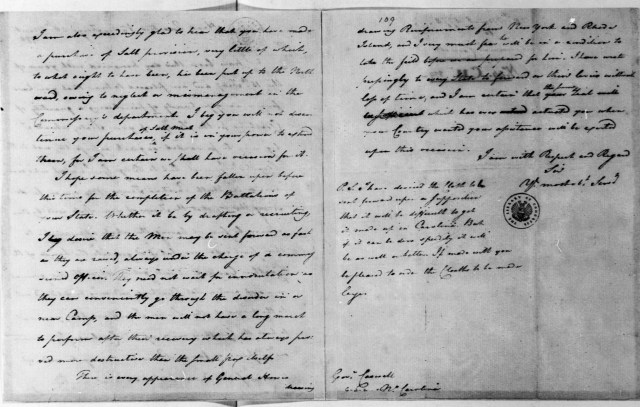
He truly sacrificed, even paying himself for NC soldiers’ shoes, blankets, and food. I even found letters, one in particular from Gen George Washington for his care of the NC soldiers!
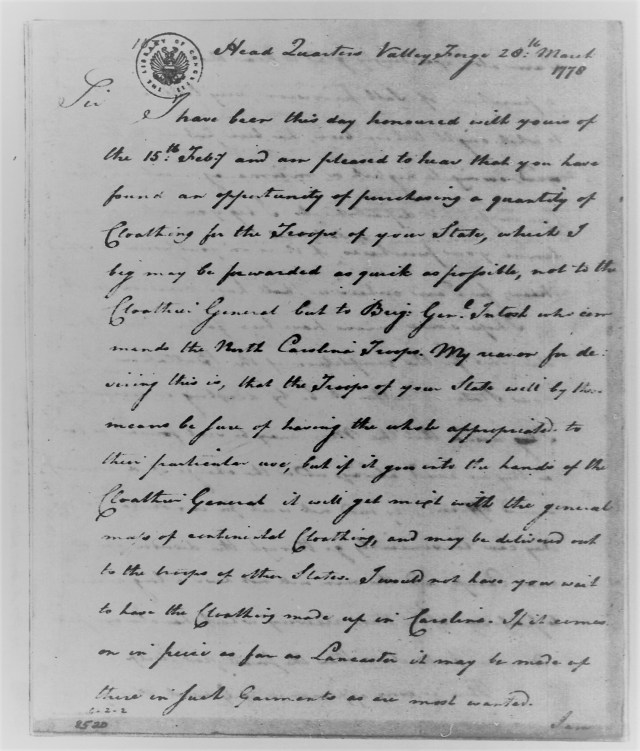
a letter acknowledging Caswell’s providing for the NC troops.
So when you think of those who founded this nation, who strived to serve in different capacities, be grateful, thankful and remember they were real people giving their all for our future when they would rather have been with their families and running their businesses.

 HONORED GENERATIONS